



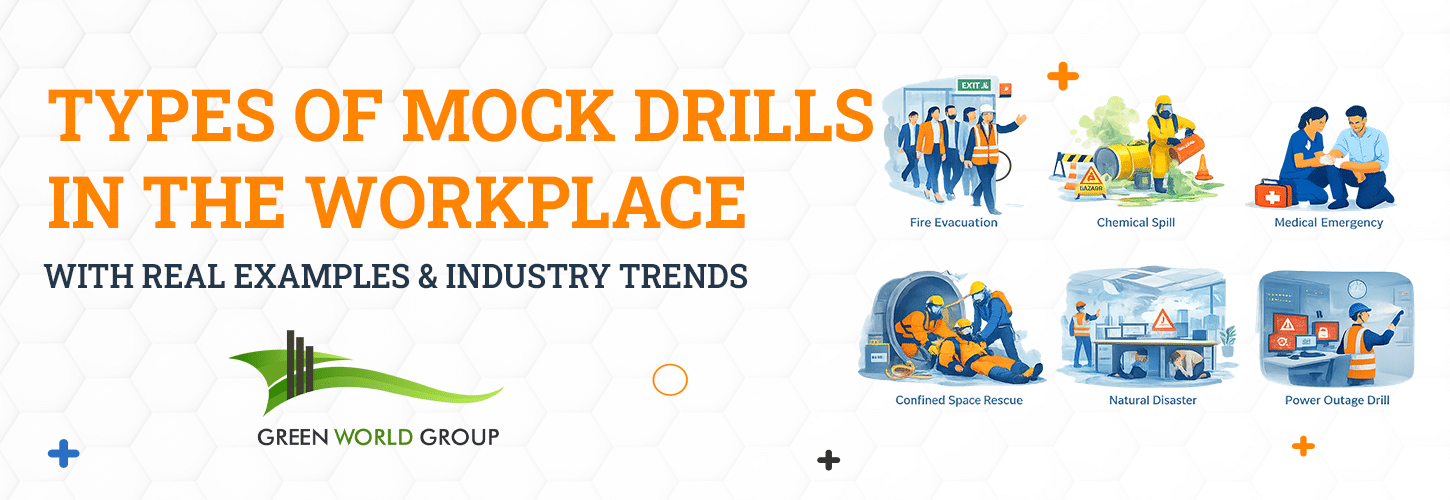
Introduction:
Mock drills are no longer just routine emergency exercises. In 2026, organizations started conducting risk-specific, scenario-driven, and compliance-aligned drills to strengthen real-time emergency response capabilities.
Many forward-thinking companies use mock drills to test response time, communication, coordination, and leadership under controlled conditions. These exercises help identify gaps, improve emergency readiness, and build employee confidence before a real emergency happens.
Let’s explore the key types of mock drills, where they are conducted, and which industries prioritize them — along with practical examples.
Types of Mock Drill and its Example
Every industry has unique risks based on its operations, equipment, materials handled, workforce size, automation level, and location.
That’s why mock drills should always be based on: Risk assessment findings, Legal compliance requirements, Past incident history and business continuity needs. Below are the major types of mock drills conducted in workplaces, along with their purpose and examples.
To understand the importance of mock drills in workplace safety, along with step-by-step procedures, benefits, and tips for conducting a safe mock drill, Click here.
1. Fire Evacuation Drill:
1. Direct Knowledge-Based Questions
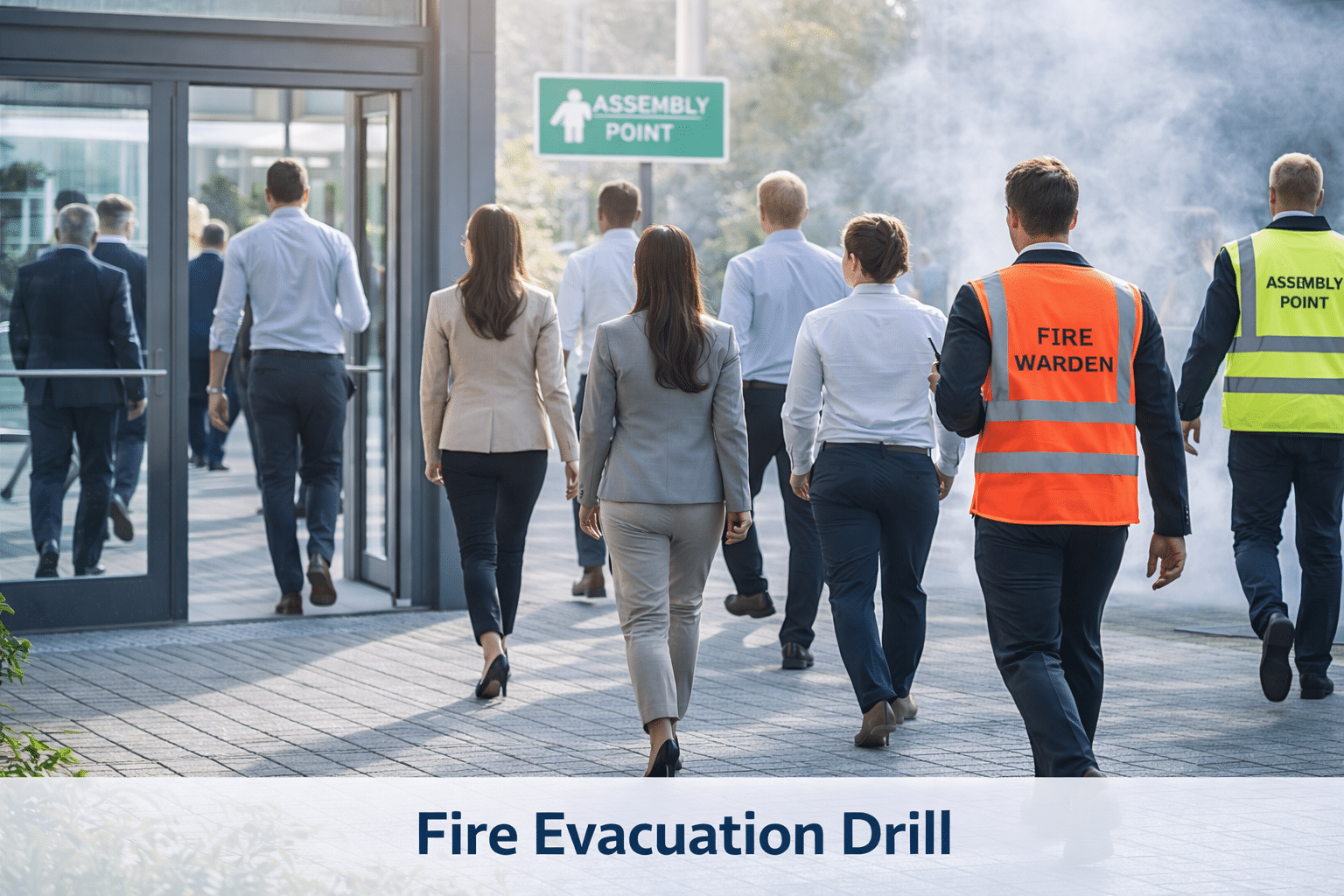
What It Tests: Fire alarm and detection performance, emergency lighting, communication clarity, safe evacuation routes, smooth staircase movement, unobstructed exits, automatic lift shutdown, electrical isolation, firefighting equipment readiness, accurate headcount, proper assembly point management, and effective fire warden coordination.
Where It Is Conducted:
Corporate offices, IT parks, factories, hospitals, shopping malls, warehouses, airports, and high-rise buildings.
Why it is Conducted:
 Meets fire safety and regulatory requirements
- Clarifies roles and improves team coordination
- Speeds up safe evacuation and response time
- Identifies gaps or system failures
- Tests leadership and decision-making under pressure
- Ensures assembly points can handle crowd movement
- Strengthens overall emergency preparedness
Example:
During working hours, the fire alarm is activated without prior notice to simulate a real emergency. Employees stop their tasks and evacuate through designated staircases under the guidance of trained fire wardens.
Lifts remain non-operational, and security ensures emergency access routes are clear. At the assembly point, supervisors conduct a headcount and report to the incident controller.
Evacuation time, crowd movement, and communication effectiveness are recorded and reviewed after the drill.
2. Chemical Spill / Hazardous Material Drill:
A chemical spill drill simulates accidental leakage, toxic release, or hazardous material exposure to test containment, isolation, and environmental response procedures as defined in the site emergency plan and the relevant Safety Data Sheet (SDS).
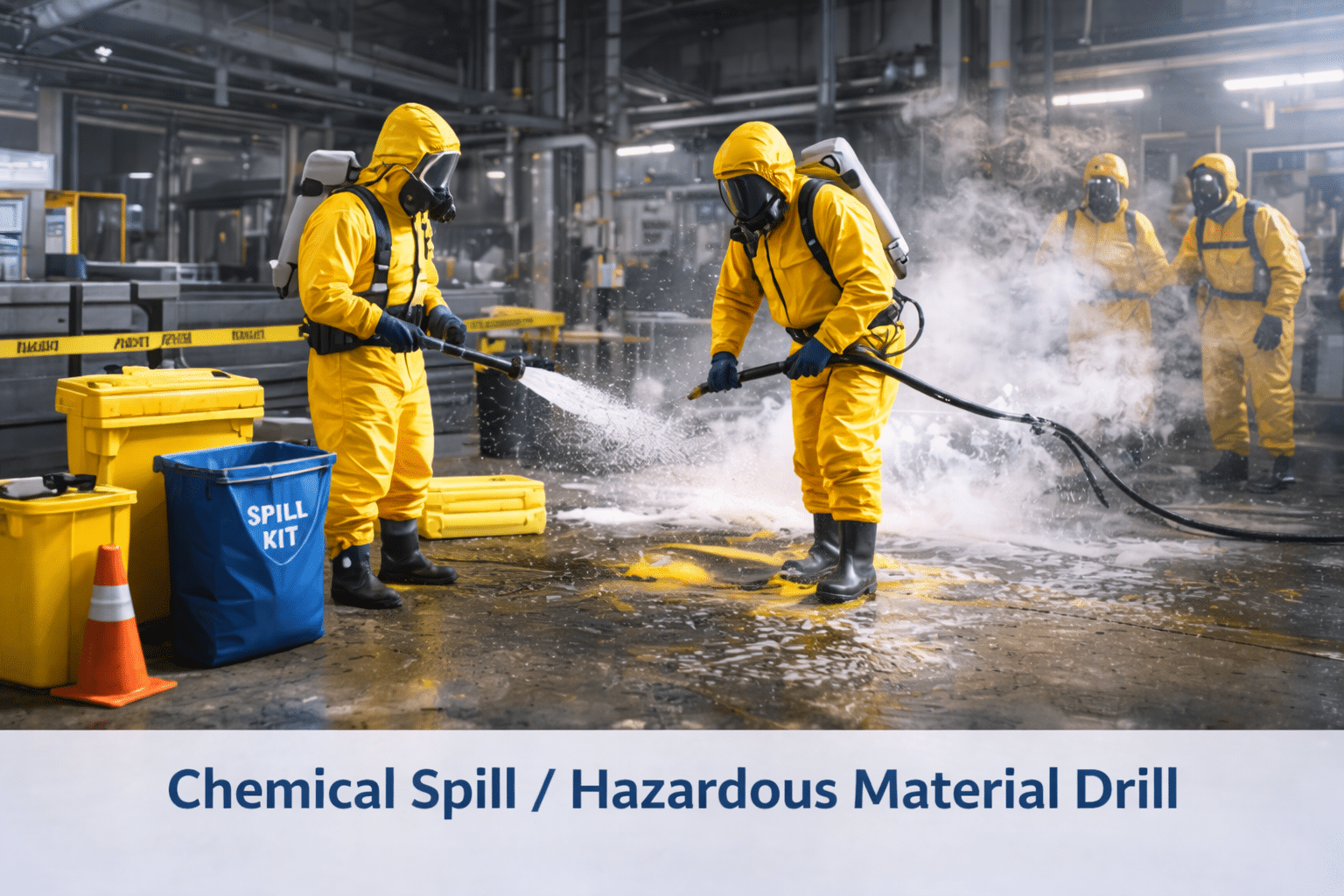
What It Tests: Spill detection speed, emergency shutdown systems, PPE compliance, spill kit deployment, area isolation, ventilation control, hazardous waste disposal, gas monitoring devices, and incident reporting protocols.
Where It Is Conducted: Oil & gas refineries, chemical manufacturing plants, pharmaceutical industries, laboratories, paint production units, and logistics warehouses handling hazardous substances.
Why Conducted:
- Prevents environmental contamination and off-site impact
- Minimizes worker exposure to toxic substances
- Ensures compliance with hazardous chemical regulations and SDS requirements
- Tests Emergency Response Team readiness under real-time pressure
- Reduces escalation risk into fire or explosion
- Limits operational downtime and financial loss
- Strengthens ESG performance and audit preparedness
- Demonstrates regulatory accountability during inspections
Example:
During a scheduled shift, a supervisor declares a simulated chemical leak in the storage area. The operator activates the emergency shutdown, and the area is isolated.
The response team, wearing chemical-resistant PPE, uses a mock substance (coloured water) to simulate the spill and deploys spill kits for containment.
Gas detectors are verified, and response time and compliance are reviewed after the drill.
3. Medical Emergency & First Aid Drill
A medical emergency drill simulates sudden health incidents such as cardiac arrest, severe injury, or heat stress to test first aid response systems
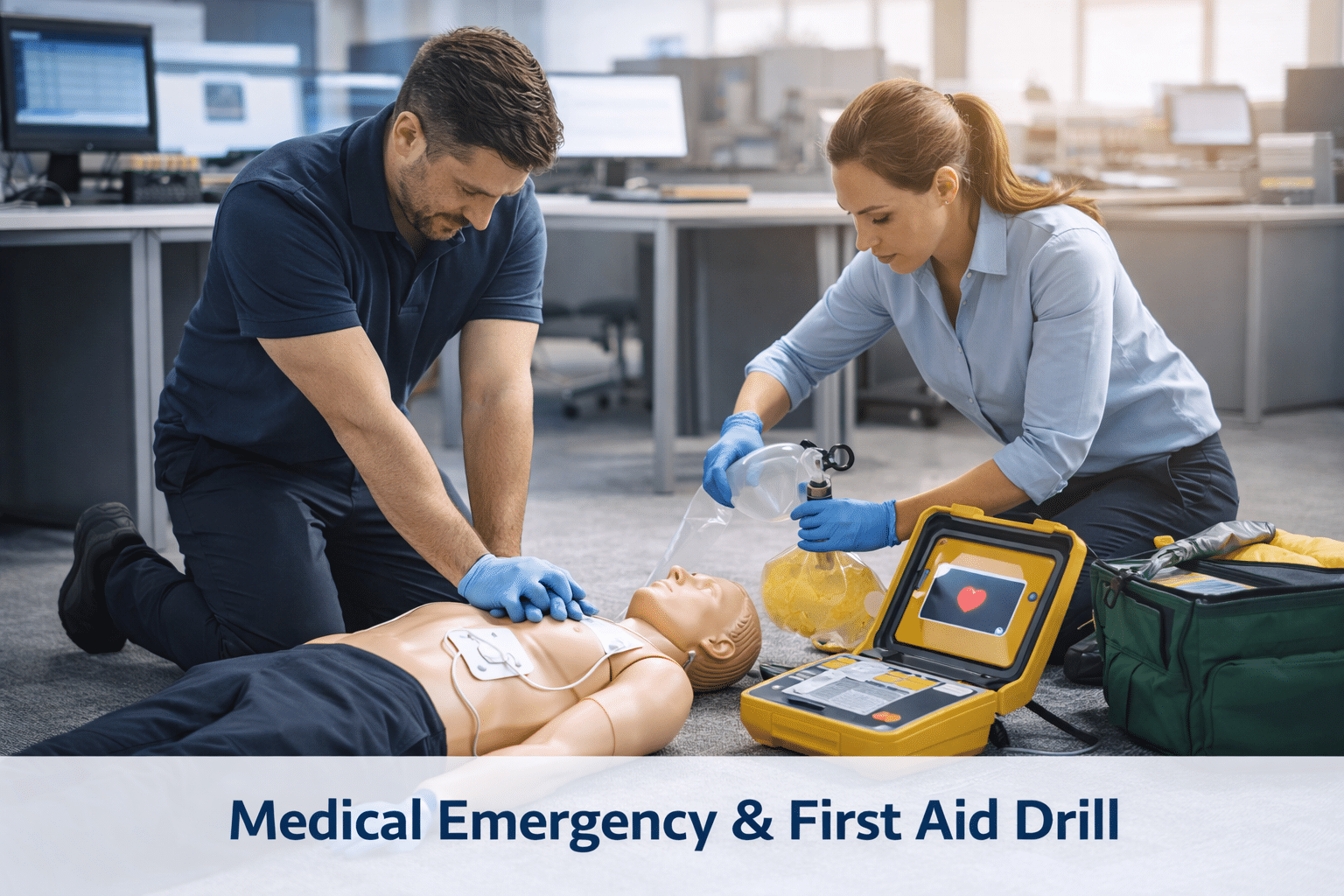
What It Tests: First aider response time, CPR technique, AED handling, stretcher movement, emergency communication, and ambulance coordination.
Where It Is Conducted: Construction sites, factories, warehouses, mining sites, and corporate campuses.
Why Conducted:
- Improves survival response capability
- Reduces risk during critical first minutes
- Verifies first aider and AED readiness
- Limits legal and liability exposure
- Strengthens on-site health preparedness
- Ensures regulatory compliance
Example:
An employee volunteers to act as an unconscious worker on-site. First aiders respond within minutes, perform simulated CPR, demonstrate AED setup (without live shock), coordinate mock ambulance communication, and record response timing for assessment.
4. Confined Space Rescue Drill
A confined space rescue drill simulates emergency retrieval of a worker from tanks, pits, or enclosed areas with potential oxygen deficiency or toxic gas presence.
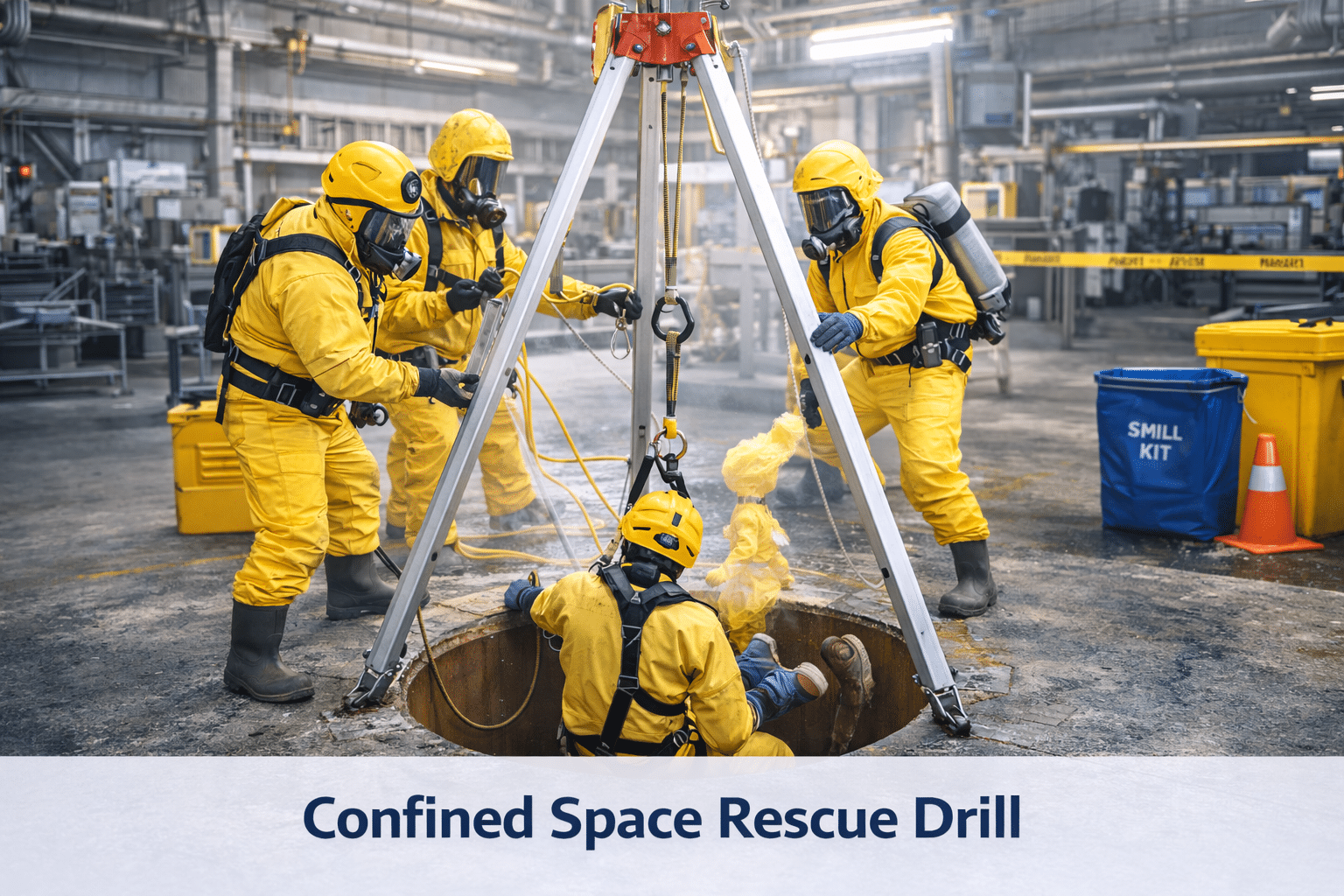
What It Tests: Gas detector calibration, entry permit compliance, breathing apparatus readiness, tripod & winch systems, standby personnel coordination, and rescue communication.
Where It Is Conducted: Oil refineries, power plants, heavy industries, rig, sewage treatment plants, and infrastructure projects.
Why it is Conducted:
- Validates the permit-to-work system during emergency simulation
- Verifies rescue decision-making before actual entry
- Tests real-time coordination between standby and rescue teams
- Identifies procedural and communication gaps
- Prevents unsafe or unauthorized rescue actions
- Measures response and extraction time
- Demonstrates practical emergency readiness during inspections
Example:
A mock entrant inside a tank is declared “non-responsive.” The standby attendant activates rescue protocol, gas readings are checked, tripod retrieval equipment is installed, and the rescue team performs a controlled extraction using a mannequin for safety evaluation.
5. Natural Disaster Drill
A natural disaster drill prepares organizations for region-specific threats such as earthquakes, floods, cyclones, or extreme heatwaves.
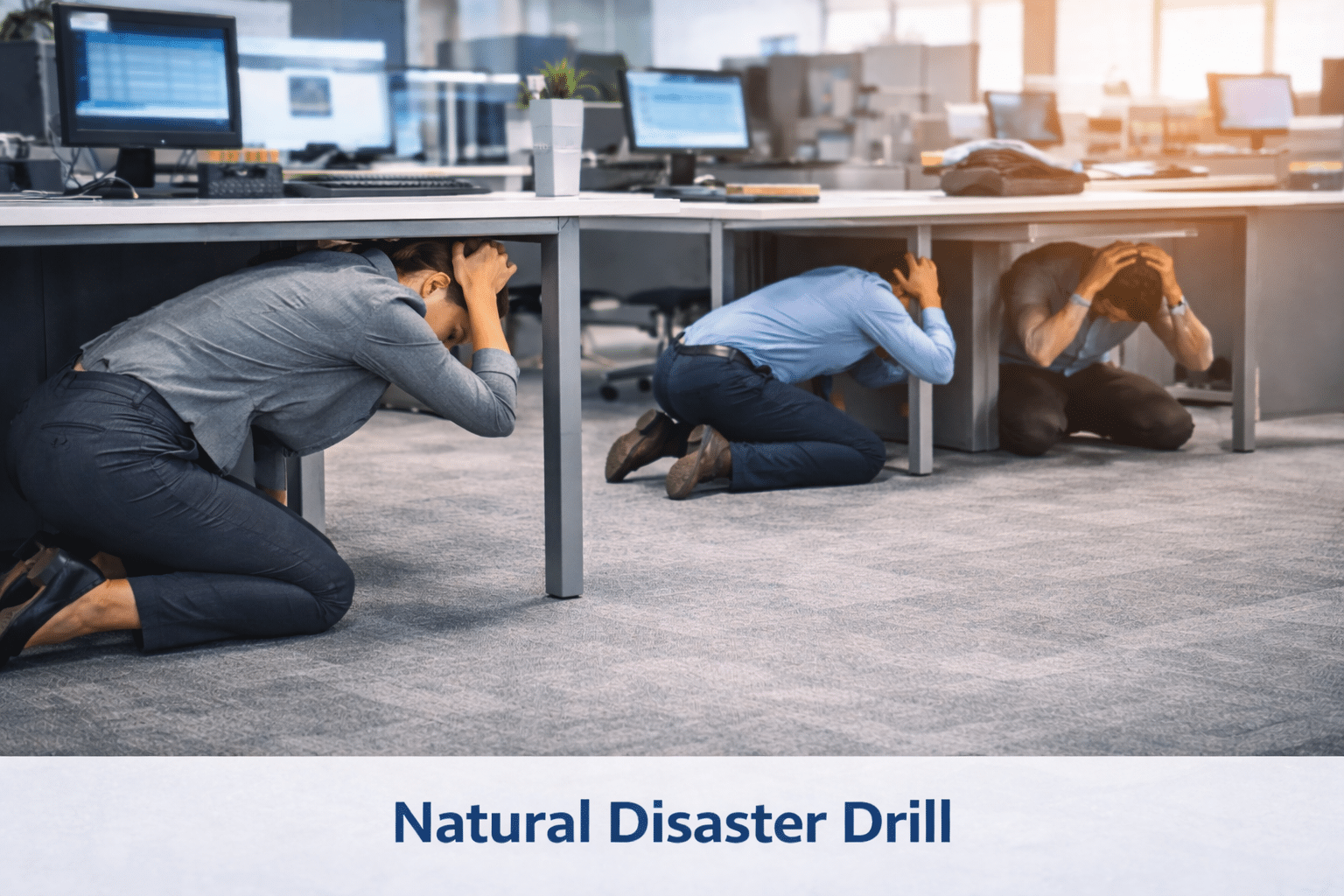
What It Tests: Structural evacuation plans, emergency communication alerts, disaster response roles, and business continuity activation.
Where it Conducted Most: Coastal industries, high-rise buildings, SEZ zones, government facilities, and seismic regions.
Why it is Conducted:
- Minimizes panic during sudden disasters
- Protects life in structural emergencies
- Strengthens disaster preparedness compliance
- Supports business continuity planning
Example:
An earthquake siren simulation is triggered. Employees practice “Drop, Cover, Hold,” followed by phased evacuation. Emergency coordinators conduct floor sweeps and simulate damage reporting while management activates mock contingency planning.
6. Cybersecurity & Power Outage Drills
In 2026, operational disruption is not limited to physical hazards. Organizations now conduct cyber-physical mock drills to simulate ransomware attacks, data breaches, and sudden power failures affecting automated systems.
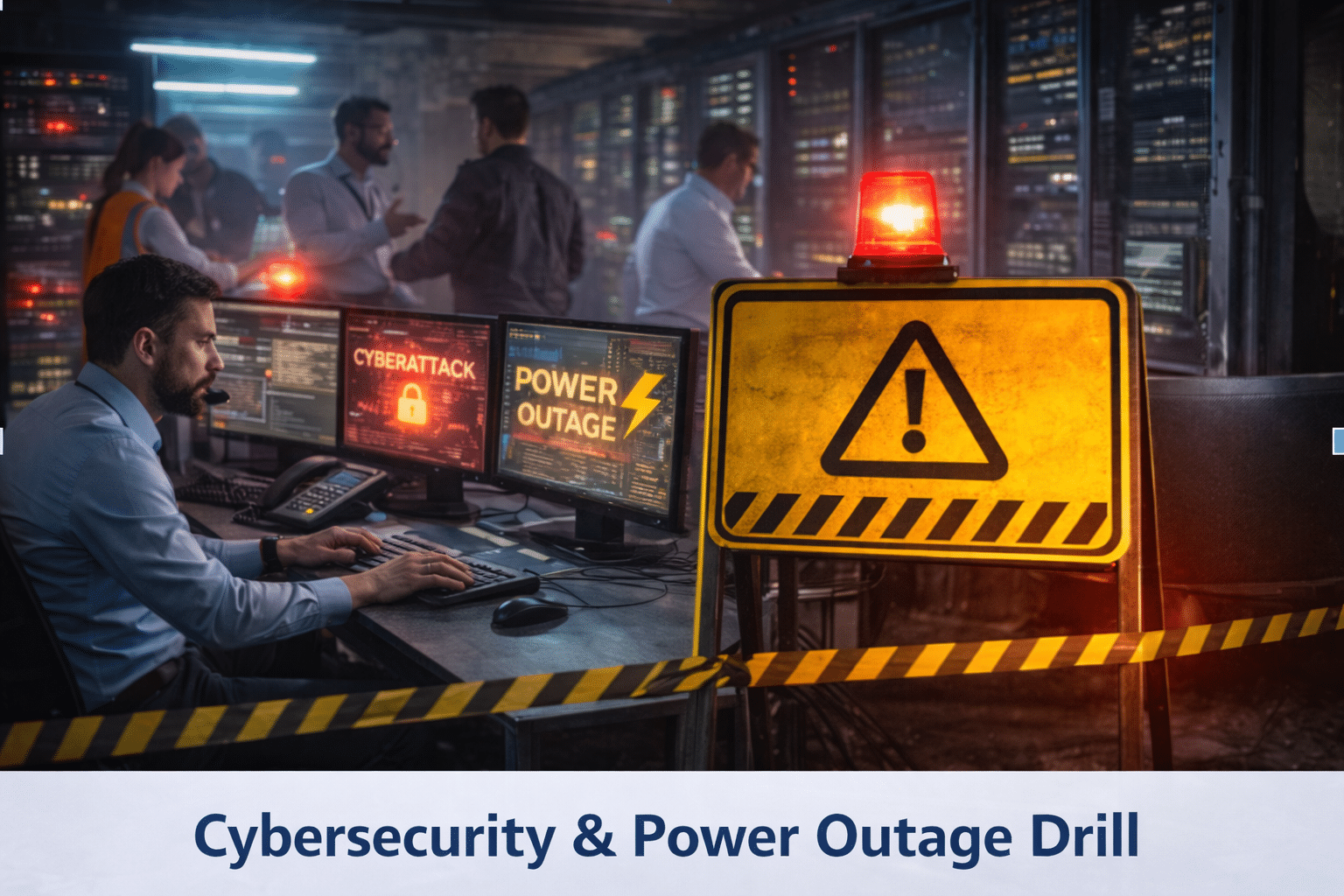
What It Tests: IT incident response protocols, backup server activation, generator load capacity, UPS transition timing, data recovery workflow, and communication control during digital disruption.
Where Conducted Most: Data centers, banking institutions, IT parks, manufacturing plants with automation systems, hospitals, airports, and smart buildings.
Why Conducted:
- Prevents operational shutdown losses
- Protects sensitive organizational data
- Tests cyber-incident escalation matrix
- Ensures backup power redundancy
- Strengthens digital resilience strategy
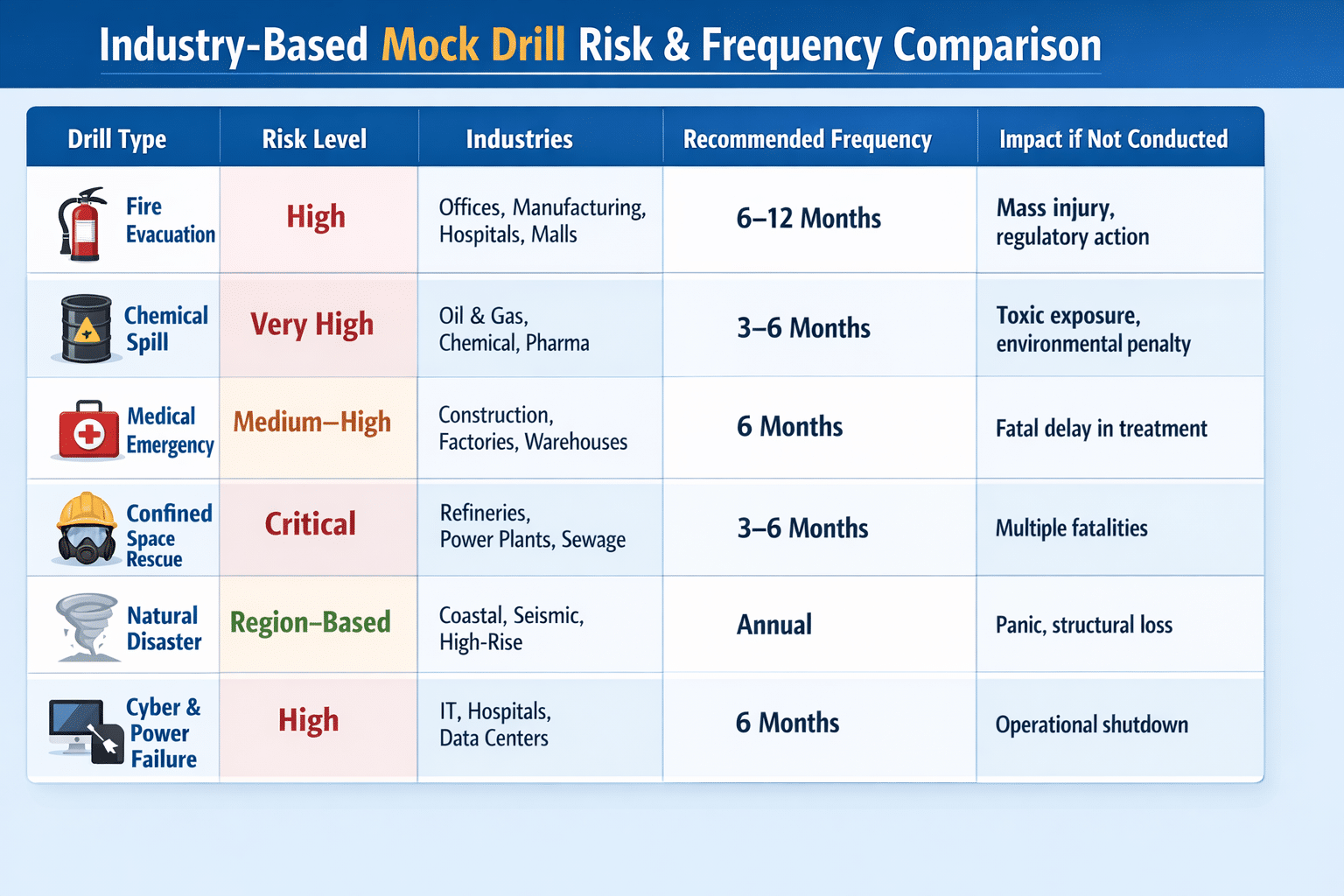
Industry-Based Mock Drill Risk & Frequency Comparison:
Conclusion: Strengthening Emergency Preparedness with Expert Guidance:
Selecting the right mock drill goes beyond compliance — it builds real-time response capability aligned with industry risks. Effective drills require structured planning, technical expertise, and measurable evaluation.
Green World Group supports organizations in conducting industry-specific mock drills and delivering specialized HSE training</a> to strengthen emergency readiness at all levels.
Join hands with Green World Group to build a safer and more resilient workplace.