



Unsafe Acts and Unsafe Conditions in the Workplace
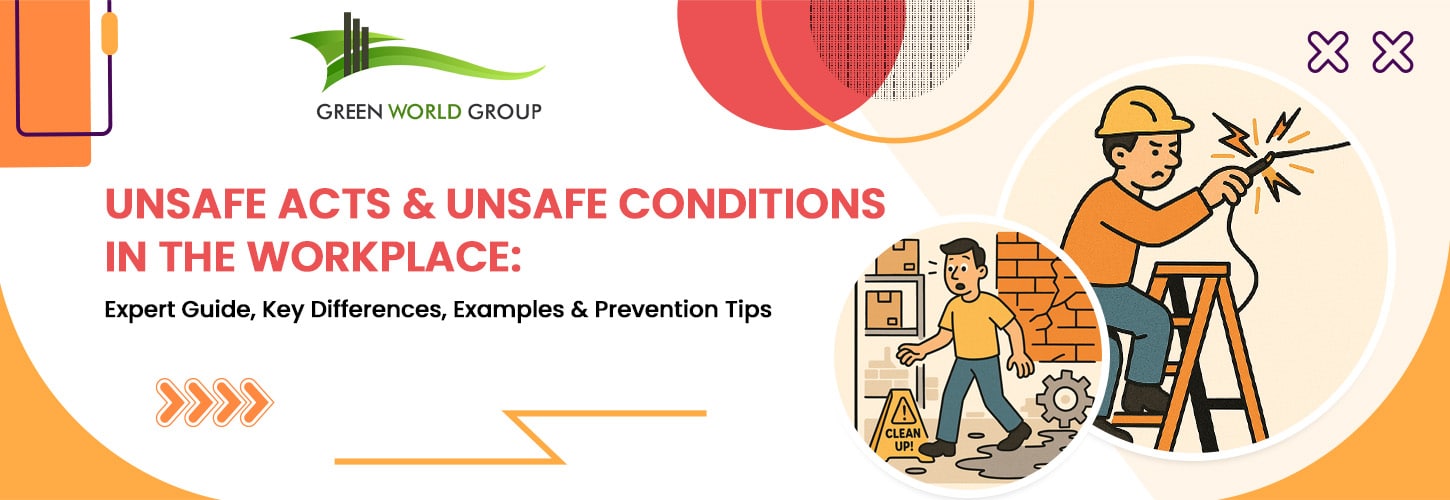
Unsafe Act and Unsafe Condition – As HSE Expert My View
“Accidents don’t just happen — they are caused.”
Every workplace incident can be traced to either an unsafe act or an unsafe condition. When people ignore safety rules or when the work environment itself is hazardous, the result is the same — injuries, downtime, and loss.
Both can be identified, controlled, and prevented before leading to incidents, near misses, and injuries.
Even though technology has automated several critical and hazardous functions previously carried out by workers, research shows that about 88% of accidents are caused by unsafe acts by employees, while 10% result from unsafe conditions in the workplace. Only a tiny 2% occur due to factors beyond human control.
So, if you are a serious learner and looking for details and guidance on “Unsafe Act and unsafe conditions“ this post is for you!
Whether you’re a safety manager, business owner, or employee, this comprehensive guide will help you identify, prevent, and address these workplace hazards effectively.
What is Unsafe Act and Unsafe Condition in the Workplace?
The simple definition of Unsafe Act and Unsafe Condition is:
People Creating Risk
Place or Environment Creating Risk
Unsafe Act
An unsafe act is any action, behaviour, or practice carried out by a person that can create a risk of injury, damage, or an incident in the workplace.
Unsafe Condition
An unsafe condition is a hazardous physical, environmental, or workplace condition that can create a risk of injury, damage, or an incident.
Difference Between Unsafe Act and Condition
| Aspect | Unsafe Act | Unsafe Condition |
|---|---|---|
| Cause | Human behaviour — carelessness, lack of awareness, rushing, or ignoring rules | Environment, equipment, or system failures — poor maintenance, faulty tools, or unsafe setups |
| Created By | Worker actions | Workplace or system issues |
| Impact | Immediate risk to self and others | Hidden or long-term risk that can trigger accidents |
| Example | Using damaged tools, bypassing safety guards, or ignoring PPE | Slippery floors, exposed wires, broken machinery, poor lighting |
| Prevention | Training, supervision, safety culture, behaviour-based safety | Inspections, maintenance, engineering controls, hazard correction |
Human behaviour — carelessness, lack of awareness, rushing, or ignoring rules
Environment, equipment, or system failures — poor maintenance, faulty tools, or unsafe setups
Worker actions
Workplace or system issues
Immediate risk to self and others
Hidden or long-term risk that can trigger accidents
Using damaged tools, bypassing safety guards, or ignoring PPE
Slippery floors, exposed wires, broken machinery, poor lighting
Training, supervision, safety culture, behaviour-based safety
Inspections, maintenance, engineering controls, hazard correction
5 Common Examples of Unsafe Act and Unsafe Condition with Pictures
Unsafe acts are actions or behaviours that can increase the likelihood of workplace incidents and injuries.
Unsafe Act Examples
Ignoring Safety Gears (PPE): The Very First warning
Failing to wear the required personal protective equipment (PPE) can expose workers to unnecessary hazards and increase the risk of workplace injuries.
Misuse of Equipment and Machinery
Operating machinery without proper training, using faulty tools, removing safety guards, skipping maintenance, or ignoring LOTO procedures can create serious workplace risks.
Improper Lifting Techniques
Lifting incorrectly, twisting while carrying loads, or failing to use a team lift when required can increase the risk of strains and other injuries.
Distracted Behaviour
Horseplay, running, joking, using mobile phones in hazardous areas, or other distractions can reduce awareness and increase workplace safety risks.
Communication and Reporting Failures
Failing to report near misses or hazards, ignoring warnings, not communicating safety concerns, and inadequate safety briefings can allow workplace risks to remain uncontrolled.
Unsafe Conditions Example
Unsafe Conditions Examples
Workplace Environmental Factors
Overcrowding, poor lighting, excessive noise, and extreme temperature can create unsafe working conditions and affect worker safety.
Structural and Facility Issues
Damaged flooring, faulty electrical wiring, broken or missing guardrails, and leaking roofs can create hazards within the workplace.
Fire and Emergency Preparedness Gaps
Blocked exits, inaccessible fire extinguishers, malfunctioning alarms, and the absence of fire drills can increase emergency response risks.
Poor Housekeeping and Material Storage
Disorganized work areas, unsafe stacking, spills, and blocked emergency tools or exits can create unnecessary workplace hazards.
Lack of Safety Awareness and Training
Lack of safety knowledge, inadequate hazard signs, and insufficient awareness of emergency procedures can leave workers exposed to workplace risks.
What is Near Miss in Unsafe Act and Condition Safety?
A near miss is an incident where no injury or damage occurred, but the event had the potential to cause harm. Near misses can provide an important warning that unsafe acts or unsafe conditions need to be identified and corrected.
Research shows that for every 300+ unsafe acts or conditions; there can be approximately:
Near misses are valuable warnings. Reporting and analysing them can help identify unsafe acts and unsafe conditions before they result in injuries or more serious incidents.
A proactive approach to near-miss reporting allows organizations to identify hazards, investigate underlying causes, and implement corrective actions before an incident occurs.
How to Prevent Unsafe Act and Unsafe Condition Hazards in workplace
A proactive safety approach focuses on identifying hazards, correcting unsafe conditions, and encouraging safe behaviour before incidents occur.
Unsafe Acts
- ✓ Encourage employees to report hazards and near misses immediately to prevent potential accidents.
- ✓ Conduct regular, role-specific safety training and toolbox talks to reinforce safe work practices.
- ✓ Pre-plan tasks by identifying potential risks and applying suitable control measures before starting work.
- ✓ Ensure employees consistently wear the correct PPE required for each task.
- ✓ Continuously monitor work activities and immediately address unsafe behaviours, while acknowledging and encouraging safe practices to build strong safety habits.
- ✓ Strictly follow all established safety procedures and instructions from supervisors to ensure compliance with organizational safety rules.
Unsafe Conditions
- ✓ Maintain clean, organized, and clutter-free work areas to reduce slips, trips, falls, and fire risks.
- ✓ Carry out scheduled workplace inspections and audits to detect and eliminate hazards early.
- ✓ Monitor environmental factors such as lighting, noise, temperature, and ventilation to keep conditions safe.
- ✓ Implement preventive maintenance for equipment and machinery to avoid breakdowns and safety failures.
- ✓ Apply engineering controls and design improvements wherever possible to reduce exposure to hazards.
- ✓ Display clear safety procedures, warning signs, and SOPs at accessible and visible points.
- ✓ Manage shift schedules, provide adequate breaks, and avoid overcrowding to reduce fatigue and maintain alertness.
Prevention starts with identifying hazards early, following safe work practices, and taking corrective action before unsafe acts or conditions result in an incident.
Creating a Safer Workplace Starts With Everyone
Safety is not only the organization’s responsibility; every employee is responsible for their own safety, the safety of colleagues, and the workplace.
The organization can implement rules like employees who fail to follow safety procedures may face fines or penalties. To encourage safe behaviour and accident reporting, the organization rewards employees who consistently follow safety practices and can appoint a safety leader among workers to oversee compliance and promote a positive safety culture.
Identifying hazards, following safety procedures, reporting unsafe acts and conditions, and taking corrective action all contribute to a stronger safety culture.
Prevention is always better than cure. A proactive safety culture—where employees are aware, trained, and motivated to follow safety procedures—ensures not only compliance but also the well-being of every individual on site. Remember: every action counts, every hazard matters, and every employee plays a vital role in creating a safer workplace.