



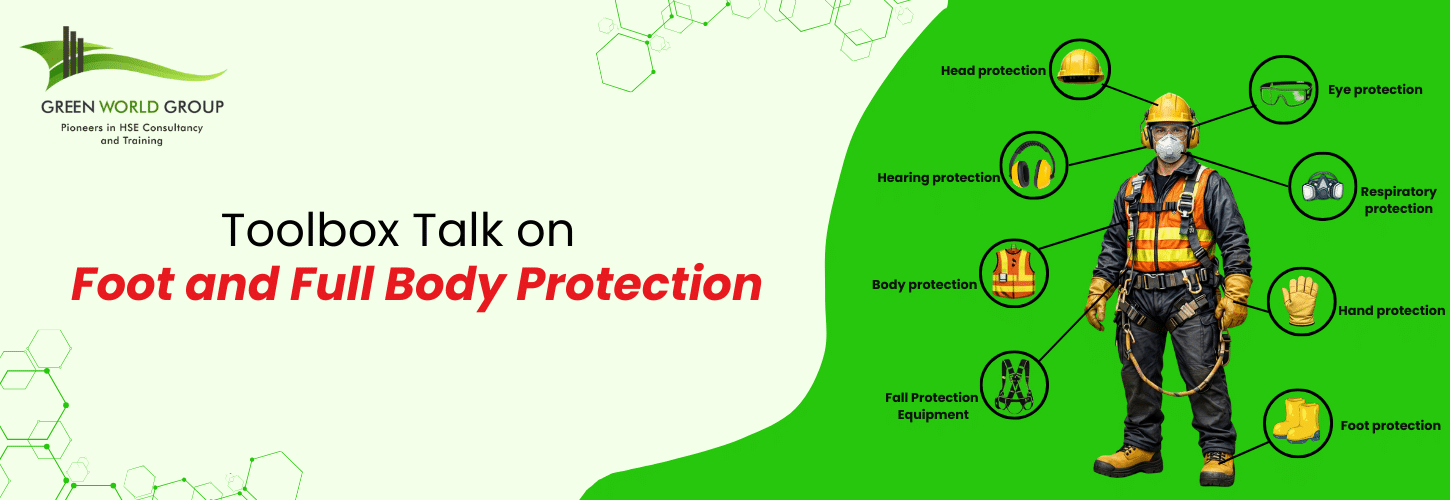
In a typical workplace, accidents can happen in an instant—dropping heavy objects, stepping on sharp materials, or slipping on wet surfaces. Foot injuries can result in an average of 7 lost workdays, significantly affecting productivity.
Since your feet are the foundation of your work, hazards like slips, trips, punctures, and falling objects can lead to serious injuries if proper PPE protection is not worn.
Common Hazards
 Dropped tools, heavy materials, or machinery
- Slippery, wet, or uneven surfaces
- Sharp objects like nails, metal shards, or glass
- Compression injuries from heavy machinery or vehicles.
- Electrical hazards in work areas
Types of Foot Protection
- Steel-Toe Boots: Protect against heavy falling objects and compression hazards.
- Slip-Resistant Footwear: Reduce the risk of slipping on wet or oily surfaces.
- Puncture-Resistant Soles: Guard against sharp objects penetrating the sole.
- Chemical-Resistant Boots: Essential when working with hazardous chemicals.
How to Prevent Foot Injuries
- Always wear footwear appropriate for your task and site conditions
- Inspect boots daily for worn soles, cracks, or damage
- Replace damaged footwear immediately
- Be cautious on wet, oily, or uneven surfaces; use handrails and follow designated walkways
- Clean mud, oil, or debris from footwear to maintain grip and prevent slips
- Enter areas with foot hazards only with proper protection
Fitting and Maintenance Tips
- Try Shoes at the End of the Day: Feet naturally swell, ensuring a better fit.
- Wear Appropriate Socks: Use the same type you wear during work to test fit.
- Use the Finger Test: Ensure there’s enough room to wiggle your toes comfortably.
- Regular Inspections: Check for wear and tear, such as worn-out soles or damaged toes.
- Replace When Necessary: If shoes are damaged or no longer provide adequate protection, replace them immediately.
Signs of Foot Injuries
- Pain, swelling, or redness after stepping on objects
- Blisters or sores from improper footwear
- Cuts or punctures from sharp debris
- Numbness or tingling caused by poor circulation or pressure
Behavioural Tips / Safe Practices
- Report unsafe conditions such as loose debris, wet surfaces, or damaged walkways
- Walk carefully on scaffolds, ladders, and uneven surfaces
- Encourage team members to remind each other about proper footwear use
Emergency Response and Reporting
Apply first aid for minor cuts or bruises.
- For serious injuries, seek medical attention without delay.
- Ensure the work area is cleared to prevent repeat incidents.
Toolbox Talk on Full Body Protection
In industrial environments such as chemical plants, maintenance, and manufacturing facilities, workers are exposed to hazards that can affect the entire body. Chemical splashes, hot surfaces, moving machinery, sharp tools, and spills can cause serious injuries if proper PPE is not worn. Full body protection is essential to stay safe, healthy, and productive.
Common Workplace Hazards
- Chemical Exposure: Acids, solvents, adhesives, and cleaning agents
- Impact Hazards: Moving machinery, forklifts, or dropped equipment
- Cuts and Abrasions: Sharp tools, metal sheets, and industrial materials
- Thermal Hazards: Hot pipes, sparks, or molten materials
- Environmental Hazards: Slippery floors, dust, or confined spaces
Types of Full Body Protection
- Chemical-Resistant Suits / Coveralls: Protect against spills and splashes
- Flame-Resistant Clothing: For hot work or fire-prone areas
- High-Visibility Jackets / Vests: Ensure visibility in busy industrial zones
- Impact-Resistant Padding: Protect the torso and limbs from heavy objects
- Gloves, Boots, and Helmets: Complete protection in hazardous environments
Key Safety Practices to Follow
- Hazard Awareness: Identify workplace hazards and stay alert to potential risks.
- Safe Work Methods: Use equipment and tools correctly and keep your workspace organized.
- Select Appropriate Clothing: Choose PPE and work clothing suitable for your specific tasks and hazards.
- Emergency Preparedness: Know the location of safety equipment and exits, and report hazards promptly.
- Personal Hygiene & Maintenance: Protect hands and exposed skin by washing thoroughly, remove contaminated PPE safely, and clean/store gear properly.
- Work Area Organization: Keep workspaces clear, ensure proper ventilation, and store PPE materials safely.
Chemical Splash in Industries: Why PPE matters
During a routine transfer of a corrosive liquid, a container slips and spills onto a worker’s torso. Because the worker was wearing a chemical-resistant suit, gloves, and boots, the liquid was contained on the PPE. Quick removal of the contaminated suit and use of the safety shower prevented burns or long-term injury.
Lesson: Always wear full-body PPE appropriate for the task. PPE is only effective when worn consistently and correctly. Inspect, maintain, and replace your equipment as needed, and stay aware of hazards in your workplace.
Get Complete guidance on PPE usage here: Expert Guide on PPE safety