



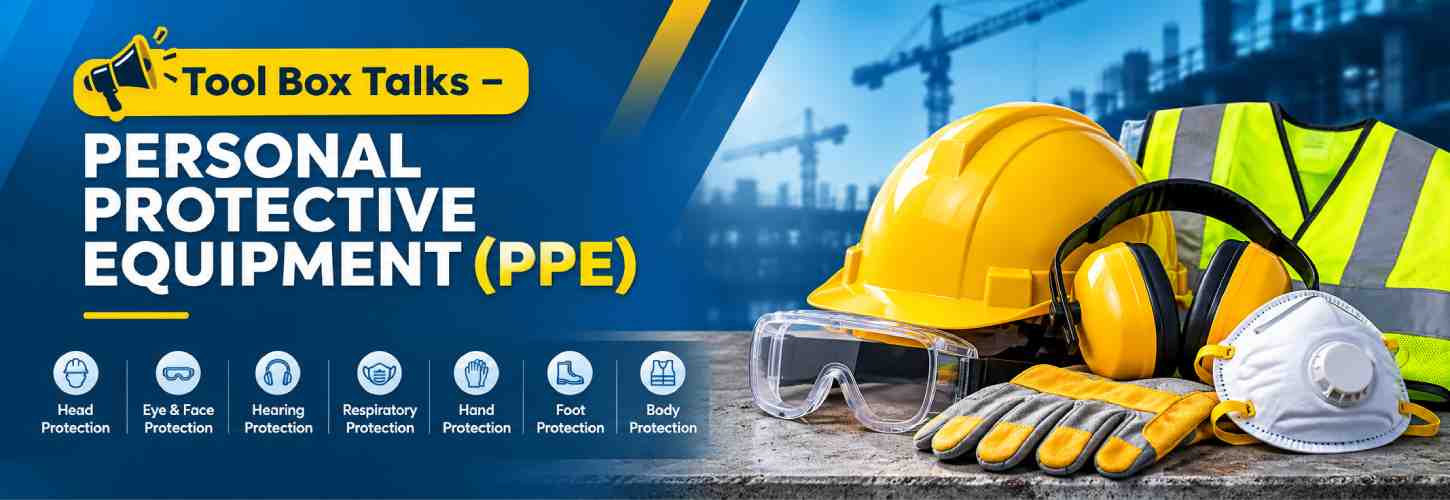
Understanding Personal Protective Equipment (PPE)
There are workers who skip PPE because they are “just doing a quick job” — and the result can be costly, both in terms of human health and lost productivity.
This toolbox talk provides a practical guide to PPE safety, covering its importance, different types, correct usage, maintenance and storage. It helps workers understand why PPE is necessary and how to use it effectively during everyday workplace activities.
Personal Protective Equipment should be selected according to the hazards identified in the workplace risk assessment. It is an important part of a wider safety system, alongside other effective hazard control measures.
What Is the Use of PPE Toolbox Talks & How to Conduct Them Effectively?
A Toolbox Talk (TBT) is a short pre-shift safety meeting that helps teams understand site-specific hazards, reinforce safe practices, and stay alert before starting work.
Toolbox Talks about PPE ensure that workers understand why PPE is necessary, how to use it correctly, and the consequences of neglecting it, leading to a safer and more compliant workplace.
Key objective: Make PPE awareness part of everyday working habits, rather than treating it as a rule that workers remember only during inspections.
Example: Personal Protective Equipment Toolbox Talk on a Construction Site
“Good morning team! Today we're going to talk about something simple but critical — Personal Protective Equipment, or PPE.”
The supervisor can use this short discussion to explain the hazards associated with the day's activities, identify the PPE required for each task, and remind workers to inspect their equipment before starting work.
What Is PPE & Why Is It Important?
PPE (Personal Protective Equipment) means all equipment worn to protect the wearer against risks to health and safety. It covers specific parts of the body depending on the hazard. Without proper PPE, the likelihood of injuries, both minor and serious, increases.
- PPE shields against physical, chemical and environmental risks.
- Using PPE helps workers meet applicable workplace safety requirements.
- Wearing PPE properly allows employees to work more safely and confidently.
- It reduces exposure to hazards and helps protect workers' health and productivity.
Remember: PPE is generally considered the last line of defence. It should not replace more effective hazard control measures wherever those measures are reasonably practicable.
The Right Way to Use PPE
Providing PPE alone is not enough. Workers must understand how to select, wear, adjust, inspect and maintain the equipment for it to provide the intended protection.
- Understand the risks present and why PPE is needed.
- Know how the equipment works, its limitations and how to use it safely.
- Learn how to put on, adjust and remove PPE properly.
- Check for any testing or inspection requirements before use.
- Perform basic maintenance such as cleaning and hygiene.
- Be aware of factors affecting performance, including working conditions, damage or defects.
- Report defective or worn-out PPE immediately.
- Know where to obtain replacements.
Common PPE Mistakes to Avoid
Incorrect PPE use can create a false sense of security. Workers should avoid the following common mistakes:
✓ Safe Practices
- Choose PPE suitable for the task.
- Wear PPE whenever the identified hazard requires it.
- Follow manufacturer instructions.
- Inspect equipment before use.
- Clean and maintain reusable PPE.
× Avoid These Mistakes
- Don't use PPE unsuitable for the task.
- Don't skip PPE, even for quick jobs.
- Don't modify or tamper with PPE.
- Don't use damaged or expired equipment.
- Don't share PPE without appropriate cleaning and sanitation.
PPE Protection Types – Keeping You Safe at Work
PPE is an important line of defence against workplace hazards. Each type of PPE is designed to protect specific parts of the body. Using the appropriate equipment correctly helps reduce the risk of injury.
1. Head Protection
Helmets prevent injuries from falling objects or accidental impacts. Inspect for cracks and ensure the chin strap is fastened where required.
2. Hand Protection
Gloves must match the task and hazard. Check for wear, tears, contamination or damage and replace unsuitable gloves.
3. Eye & Face Protection
Goggles or face shields protect against dust, sparks and splashes. Keep them clean and replace scratched or damaged equipment.
4. Foot & Leg Protection
Safety footwear with suitable toe protection and slip-resistant soles helps protect against crushing injuries and slips. Check soles and laces regularly.
5. Ear Protection
Earplugs or earmuffs help prevent noise-induced hearing damage. Ensure proper fit, cleanliness and suitability for the noise exposure.
6. Respiratory Protection
Masks and respirators protect the lungs against dust, fumes and chemicals when correctly selected. Check fit and replace filters as required.
7. High-Visibility & Body Protection
High-visibility vests improve visibility, while suitable protective clothing and fall-arrest harnesses protect against specific workplace hazards. Inspect and store equipment correctly.
PPE Maintenance
Regular maintenance helps ensure PPE remains in good condition and performs as intended. Workers should follow the manufacturer's instructions and workplace inspection procedures.
Inspect PPE for cracks, wear, contamination or damage before each use.
Clean equipment following the manufacturer's instructions and hygiene requirements.
Replace equipment according to its recommended service life or whenever it becomes damaged.
Simple maintenance may be completed by trained users where permitted. Complex repairs should be handled by a competent person or the manufacturer.
Observe the required inspection, testing and maintenance schedules.
PPE Storage
Correct storage protects PPE from damage, contamination and premature deterioration. Equipment should be stored so it remains ready for its designated use.
- Store PPE in a clean, dry and cool place away from direct sunlight and harmful chemicals.
- Avoid compressing or bending helmets, goggles or masks.
- Keep PPE organised by type for easy access and to prevent contamination.
- Label personal PPE to prevent mix-ups.
Workplace reminder: PPE that is contaminated, damaged or stored incorrectly may not provide the protection expected. Report any concerns before using it.
Final Toolbox Talk Reminder
“Remember, PPE only works when it is worn correctly, checked often, and kept in good condition. A small step can prevent major injuries. Before we wrap up, inspect your PPE now. If anything is damaged or worn, report it immediately.”
Supervisors should encourage employees to raise concerns about unsuitable, damaged or poorly fitting equipment and ensure that replacement PPE is available when needed.
Final Note: PPE Transforms Your Workplace Safety
Consistent attention to PPE transforms safety from a rule into a habit. Toolbox Talks improve workplace safety by covering PPE types, correct use, upkeep and storage. They help turn safety knowledge into practical actions, lowering risks and building a culture of protection on every site.
For more PPE Toolbox Talk topics, explore the following resources:
Strengthen Your Workplace PPE Safety Knowledge
Explore Personal Protective Equipment training and workplace safety learning programmes from Green World Group.
Explore PPE Training →