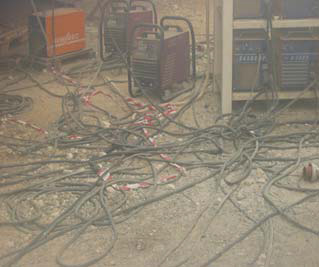
WRONG
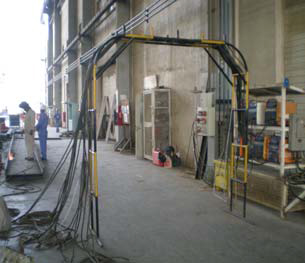
RIGHT
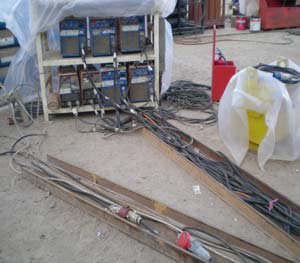
RIGHT



Health & Safety Management Courses
Personal Protection
Process Hazard
Workplace Safety
Handling Hazardous Material
Emergency Training
Confined Space
Workplace Safety
We all use electric cables, gas / air / pressure or water hoses for various reasons i.e. lighting, welding, power tools, heating, cutting, pressure testing, pneumatic gouging, fire fighting etc. When those are used properly they are perfectly safe, but on the other hand they can be deadly if not treated with respect.
We use cables and hoses every day; therefore, we need to pay extra attention to routing cables and hoses in an orderly fashion to eliminate the risk of tripping and electric shock caused by the use of damaged cables.
We therefore must plan how and where our cables are routed to minimize these risks.
Try to keep passageways clear from cables / hoses to minimize trip hazards. Use cable bridges as required to route cables across walkways.
Always route cables and hoses in an orderly manner. Use cable ramps to prevent trip chances.
Use cable trays to lay down multiple cables in an orderly fashion.
Keep cables / hoses as short as possible. Where cable stands or storages are provided must use them to keep rolled excess and unused cables / hoses.
Hang up cables / hoses and return to the proper storage areas when not in use. Separate / isolate cables from sources when not in use.
Keep cables clear from water, use pallets and ‘S’ clamps or any other materials to avoid contact with water.
Check plugs and cables condition.
Always check the cables and hoses prior to use, for any sign of wear and tear.
If you find any exposed cable, immediately remove it from site.
Asia Pacific Regional Office – India
7th Floor, Bascon Futura, New No 10/2,
Old No 56L, Venkata Narayana Road, T Nagar,
Chennai – 600017.
Head / Corporate Office – UK
Middle East Regional Office – UAE
INTERNATIONAL