



Introduction:
High noise levels are becoming a common concern in work environments, like construction, manufacturing and mining. However, excessive noise exposure is neglected, which may result in permanent damage and safety issues.
Safety earmuffs are the best option for workers to protect against excessive and long-term noise exposure and serve as a dependable solution.
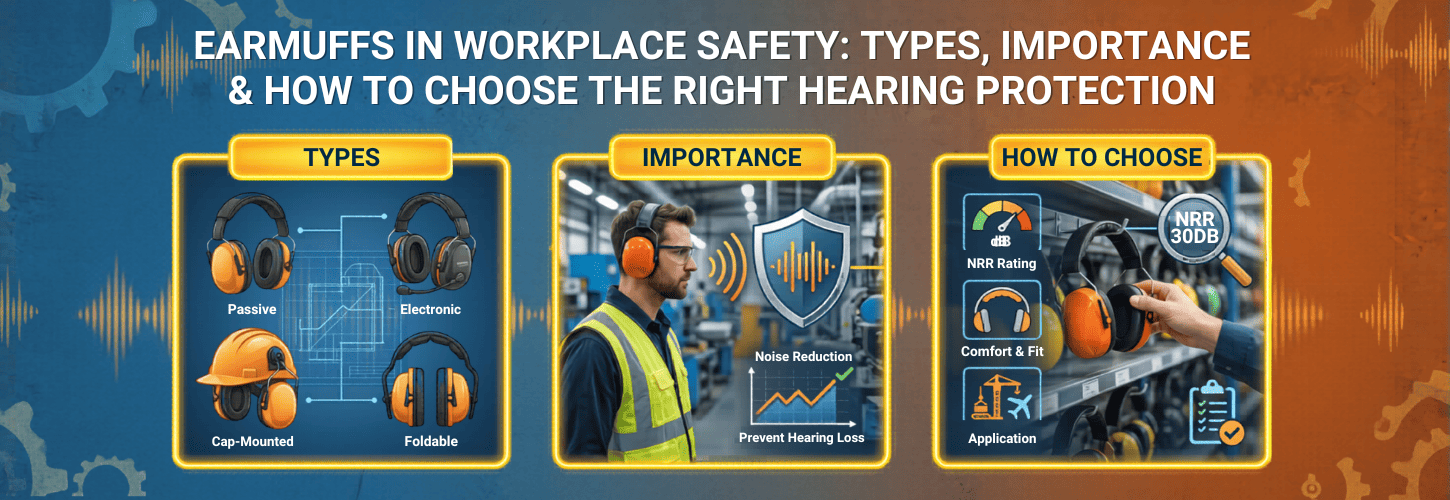
This guide explains the importance of safety earmuffs, their types, benefits, and how to choose the right protection for workplace safety.
What Are Safety Earmuffs and How they work on workplace noise
Safety earmuffs are over-the-ear hearing protection devices that reduce noise entering the ears in noisy workplaces. They consist of sound-insulating ear cups, soft cushioning for a proper seal, and an adjustable headband for a secure fit.
The ear cups contain sound-absorbing materials that block and reduce external noise effectively.
They work by blocking sound with a rigid outer shell, absorbing noise through internal foam, and creating a tight seal around the ears. Their effectiveness depends on proper fit and sealing, not just product quality.
Importance of Earmuffs in Hearing Protection
In high-noise environments, protecting hearing isn’t optional—it’s essential for long-term health and safe operations. Safety earmuffs play a critical role in reducing risks associated with continuous noise exposure.
 Protect hearing: Noise above 85 dB can damage hearing, so proper protection is essential
- Reduce long-term risk: 1 in 6 hearing loss cases is linked to workplace noise
- Lower stress and fatigue: Constant noise can be tiring and reduce energy levels
- Improve communication: Less noise makes it easier to hear instructions clearly
- Boost focus: A quieter environment helps workers concentrate better
- Increase safety: Better awareness helps prevent mistakes and accidents
 Protect hearing: Noise above 85 dB can damage hearing, so proper protection is essential
This way, earmuffs combined with proper Noise Protection training create a safer and more aware workplace.
Noise Levels That Require Ear protection:
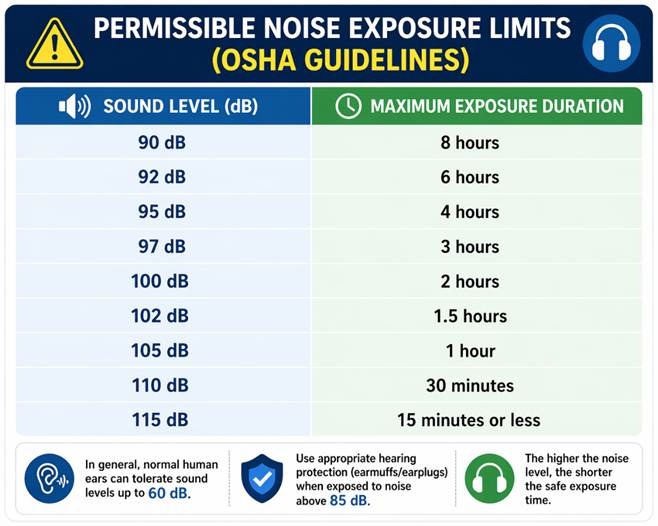
Sounds below 60 dB are considered safe hearing limits. That’s the normal background noise or conversation level. Exposure to an exceeded noise level in the long term is a serious health concern. Understanding noise levels is crucial to being aware of when to use an earmuff for improved hearing protection.
Types of Earmuffs and its Key Specifications:
Safety earmuffs come in various specifications to meet different noise settings and operational requirements. Understanding their specifications helps decide the best choice for hearing safety.
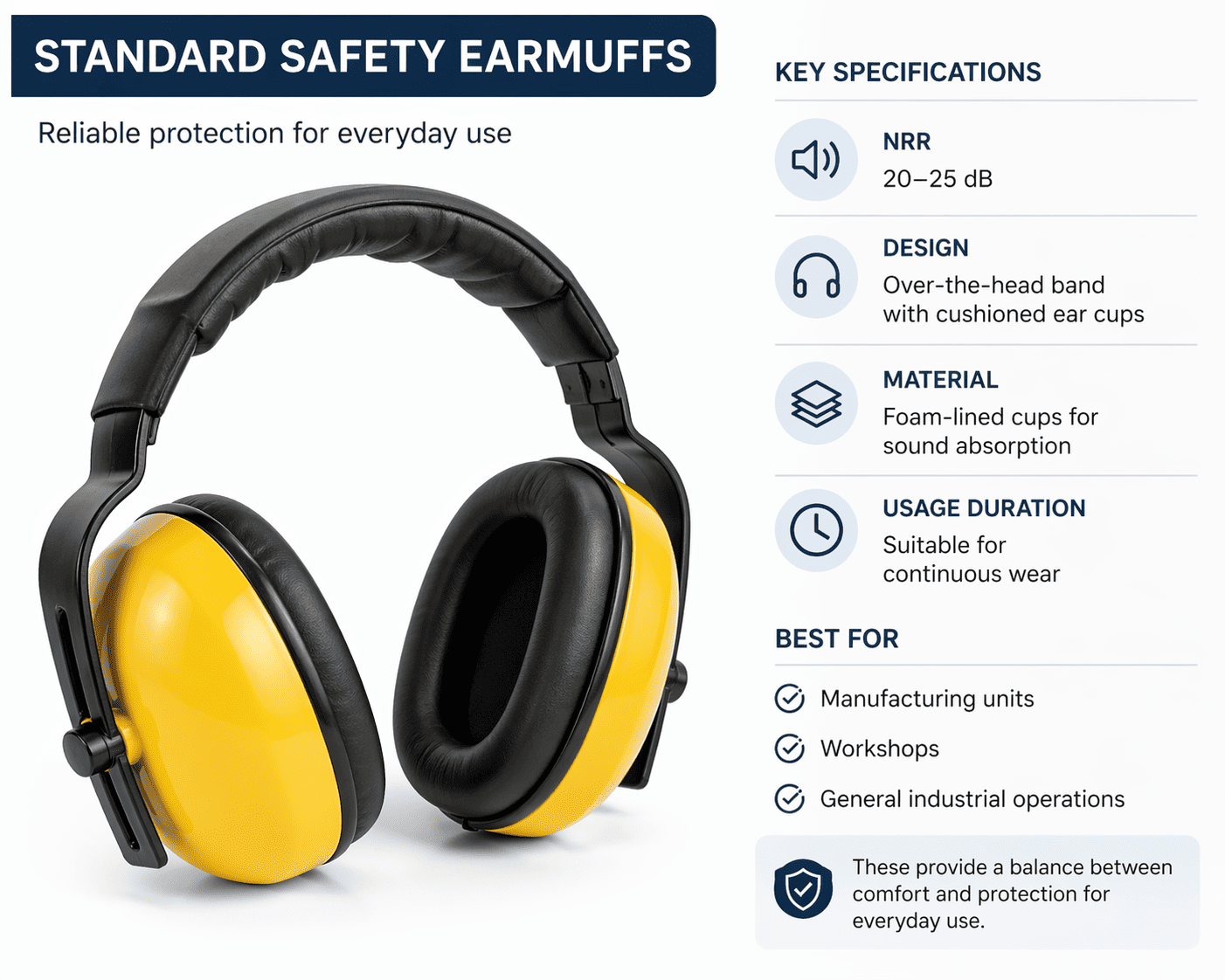
Standard Safety Earmuffs
Standard Safety Earmuffs offer consistent and reliable hearing protection in moderately noisy settings. These are ideal for durability, comfort and daily usability.
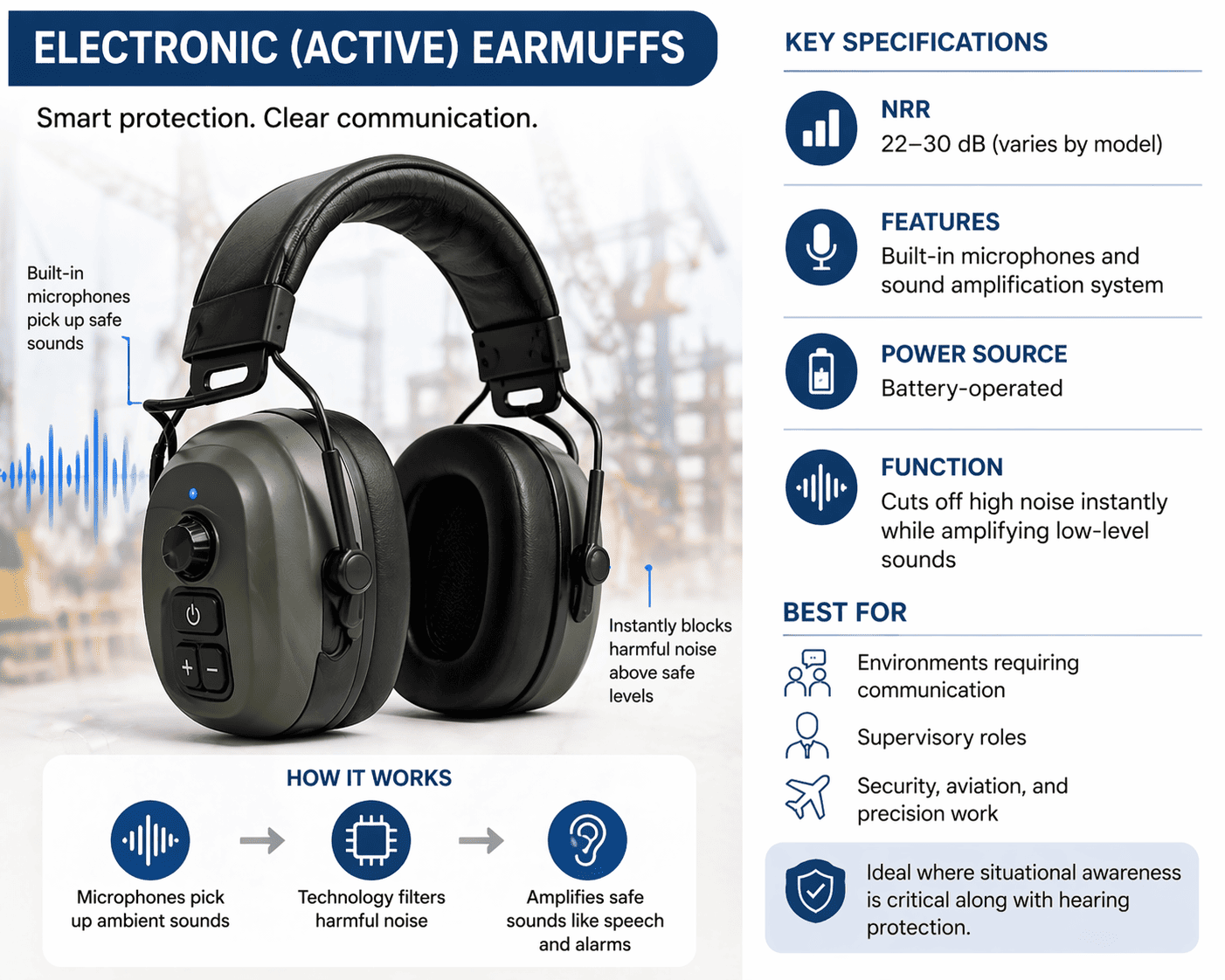
Electronic (Active) Earmuffs
Incorporates advanced technology to reduce harmful noise while allowing speech and ambient sounds. Ideal for environments where communication and situational awareness are critical.
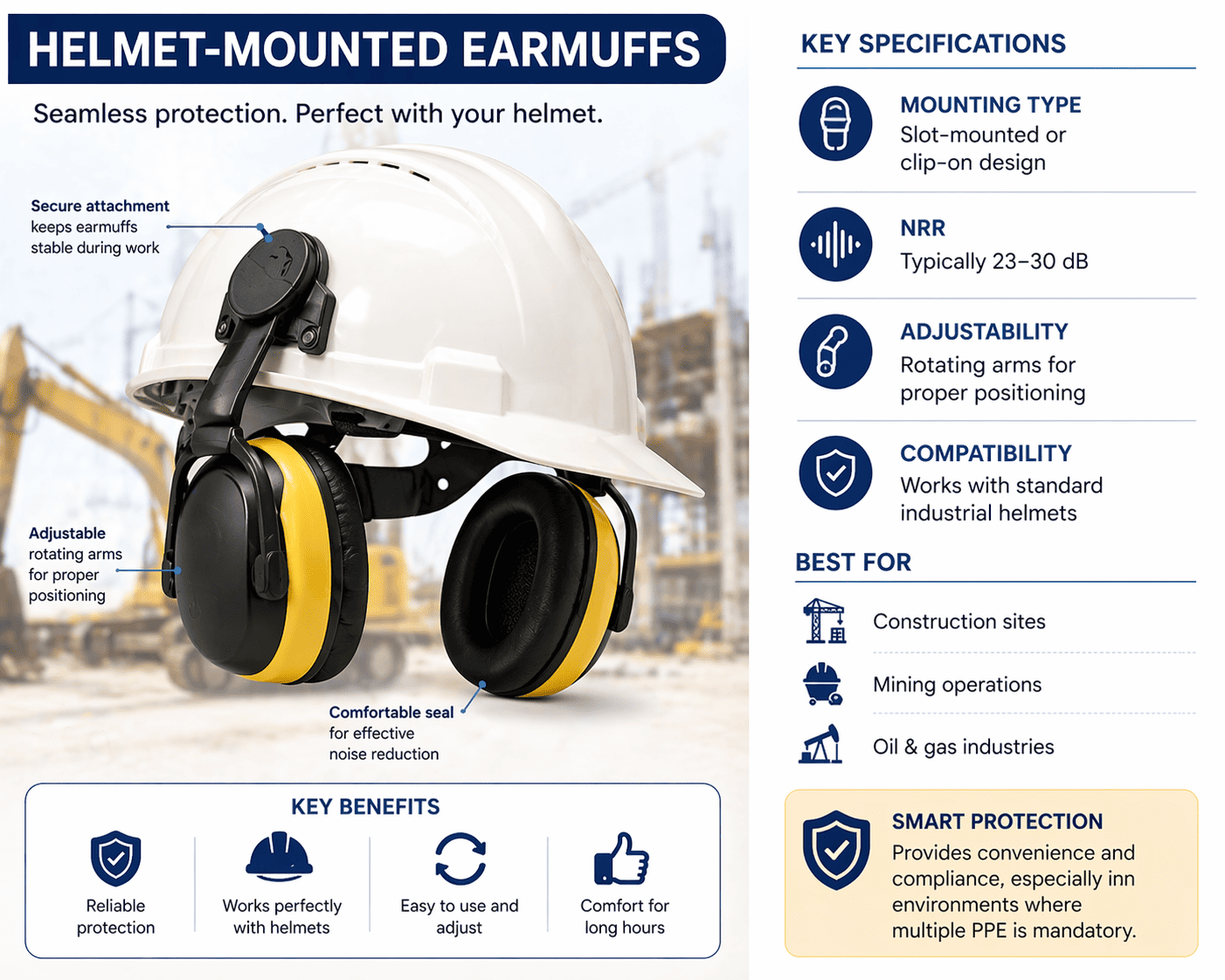
Helmet-Mounted Earmuffs
It is a type of earmuff to attach to safety helmets for better compliance and convenience and is used in industries that demand the use of various PPEs at the same time.
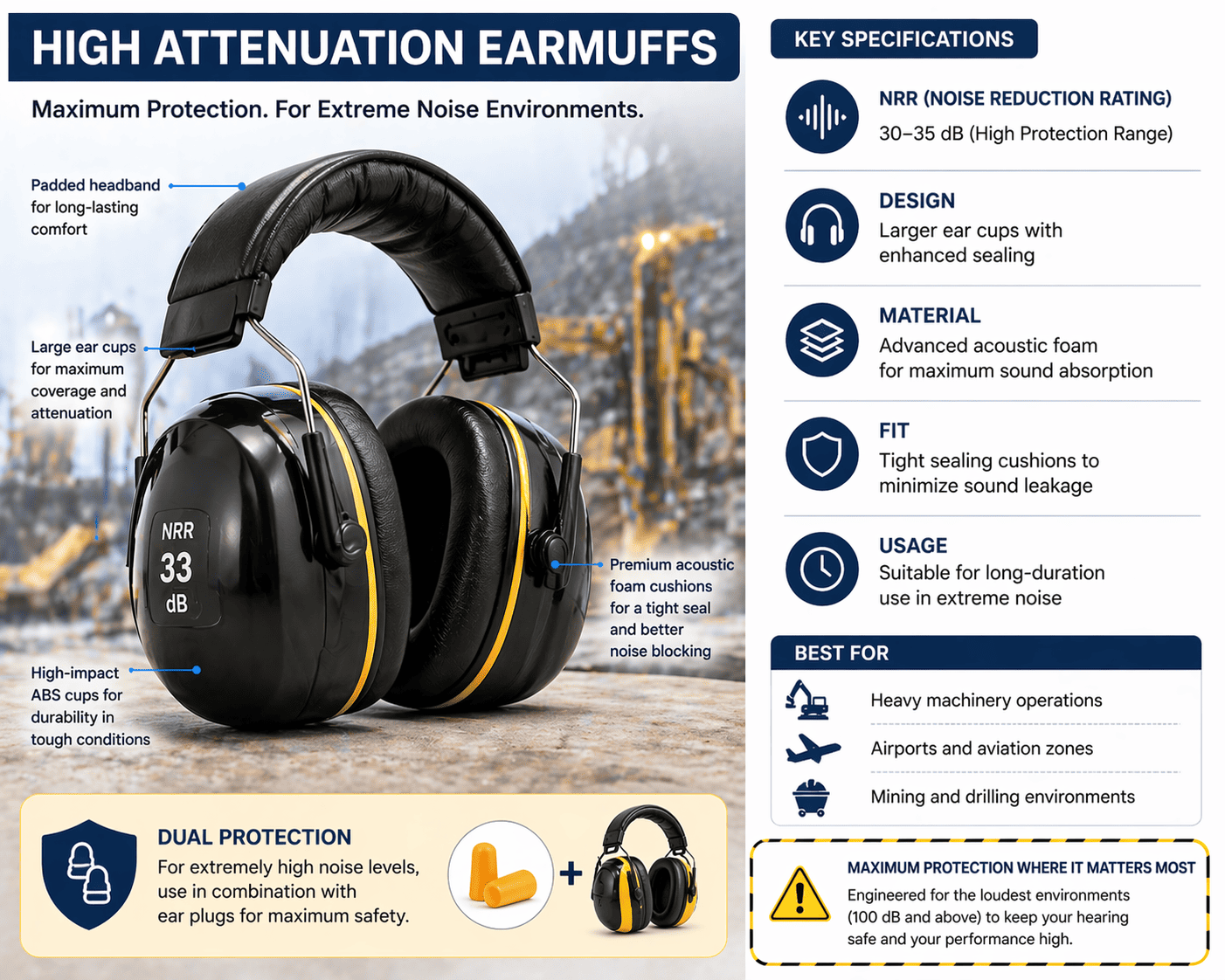
High Attenuation Earmuffs
These earmuffs provide the utmost noise reduction protection and are engineered for extremely noisy workplaces. These are optimal solutions for high-risk workplaces such as heavy machinery and the aviation industries.
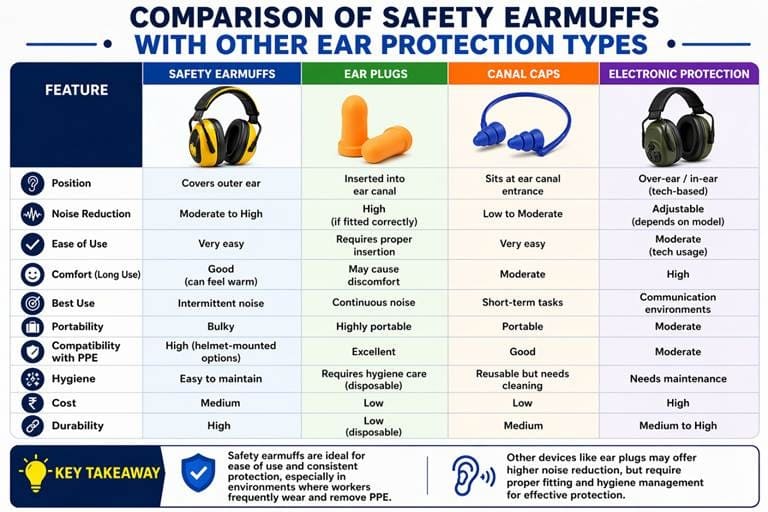
Comparison of Earmuffs with Other Ear Protection Types
Selecting the right earmuffs is essential to ensure maximum protection and comfort in the workplace.
How to Choose the Right Hearing Protection
Noise Levels
Choose earmuffs based on the intensity of workplace noise. Higher noise levels require higher-rated protection.
NRR / SNR Rating
NRR (Noise Reduction Rating) or SNR (Single Number Rating) indicates how much noise the earmuffs can reduce.
For example:
If an earmuff has an SNR of 27 dB, it can reduce noise levels by approximately 27 dB under standard conditions. This helps in selecting the right protection based on your industry requirements and exposure levels.
Comfort and Fit (5 C’s Concept)
Proper fit is critical for effective protection. Follow the 5 C’s of hearing protection:
- Comfort – Should be wearable for long hours
- Correct Fit – Ensures proper sealing around ears
- Convenience – Easy to use regularly
- Compliance – Workers must wear consistently
- Care – Requires proper maintenance
Durability
Select earmuffs made from strong materials suitable for harsh environments like construction, mining, or outdoor work.
Compatibility with PPE
Ensure earmuffs fit properly with other PPE types (Personal Protective Equipment) like Safety helmets, Goggles and Face shields. Poor compatibility can break the seal and reduce protection.
Safety Standards
Always choose earmuffs that comply with recognized safety standards (such as OSHA, ANSI, or EN standards) to ensure certified protection.
Advantages of using Safety Earmuffs
- Consistent Noise Protection – Fully covers your ears to block harmful noise effectively
- Easy to Use – Just wear and remove easily; no need to insert anything into the ear
- Comfortable to Wear – Soft cushions make it comfortable even for long working hours
- Reusable and Long-Lasting – Can be used multiple times, making it cost-effective for long-term use
- Better Hygiene than Disposable Options – Easy to clean and maintain compared to single-use ear plugs
- Easy to Monitor – Clearly visible, so supervisors can ensure workers are wearing them
- Works with Other Safety Gear – Can be worn along with helmets, goggles, and face shields
Common Mistakes When Using Earmuffs
- Improper fitting
- Not properly sealed the ears
- Usage of worn-out or damaged cushions
- Inconsistent use in noisy settings
- Overlooking maintenance
The above mistakes impact the effectiveness of protection.
Maintenance and Care Tips
Following certain steps ensures the long-term performance of earmuffs and improves their lifespan.
- Consistent cushions cleaning
- Check for signs of wear & damage
- Replace worn-out ones
- Storage in a clean and dry atmosphere
Conclusion: Equip your Employees with PPE Training
Safety earmuffs shield ears against excessive noise exposure. They avoid hearing damage and offer simple and effective hearing protection. Still, their effectiveness is determined by:
- The right choice
- Appropriate use
- Regular maintenance
- Essential PPE training
- Regular toolbox talks on Ear protection
Providing hearing protection training to workers goes beyond fulfilling compliance. It helps prevent the risk of hearing loss and ensures workplace health and safety.
At Green World Group, we deliver practical safety training that builds awareness and reduces risks. Get trained today for a safer workplace.